What Is VO2 Max? How Do Smartwatches Measure It, and What Should Runners Aim For?
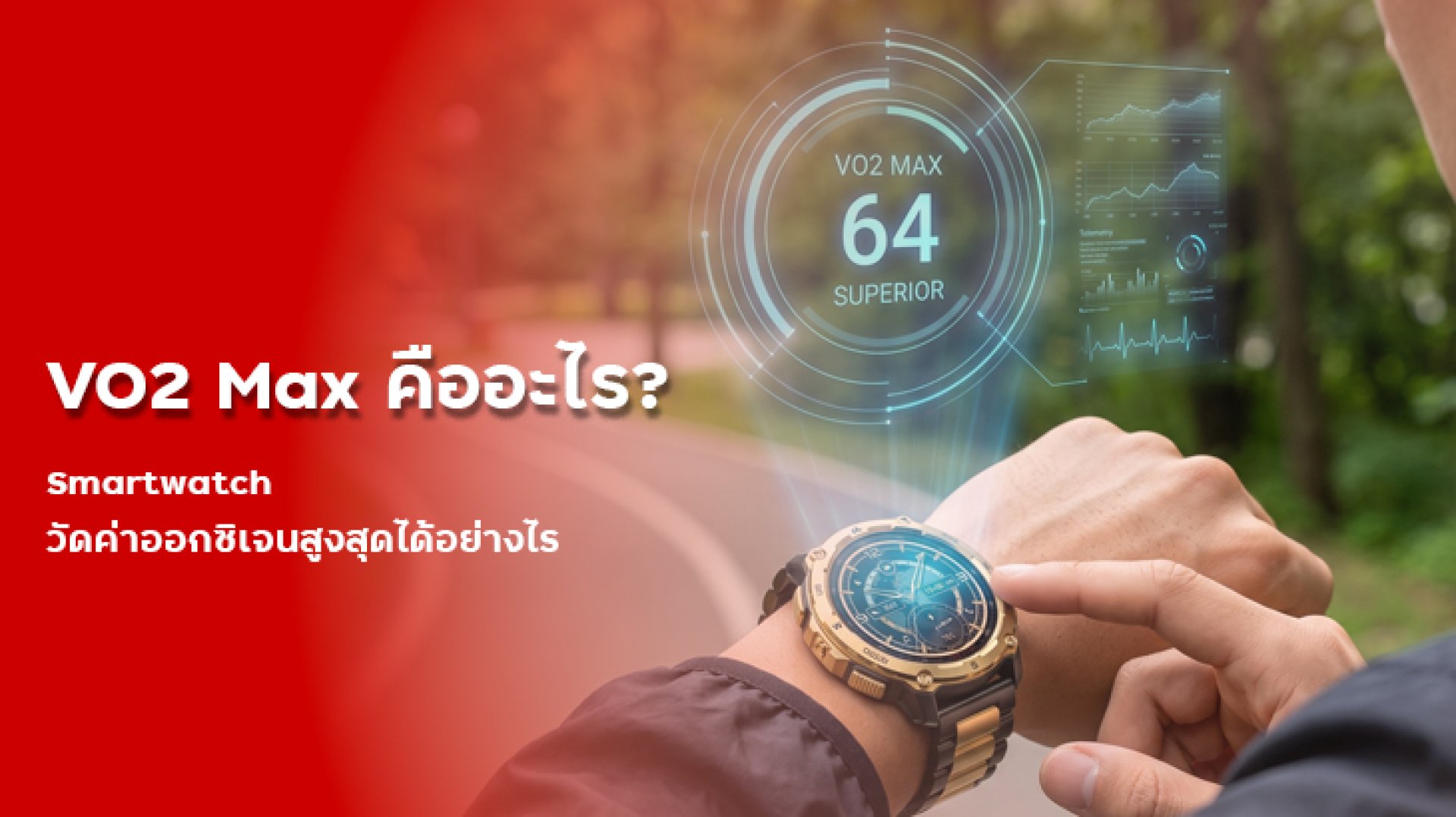
Have you ever wondered why some runners can maintain a fast pace over long distances without appearing to struggle as much as others? One important fitness metric that may help explain this difference is VO2 Max. If you use a smartwatch to track your workouts, you may have already seen this number displayed in your fitness statistics. But what is VO2 Max, why does it matter, and how can you use it to understand your running performance?
Many smartwatches now estimate VO2 Max automatically, showing results such as 35, 42, or 50 ml/kg/min. These numbers can provide useful information about your aerobic fitness, but they can also be confusing if you do not know how to interpret them. This guide explains what VO2 Max means, how smartwatches estimate it, what the numbers tell you, and how runners can use this information to improve their training.
What Is VO2 Max and Why Does It Matter to Runners?
VO2 Max refers to the maximum amount of oxygen your body can take in, transport, and use during intense physical exercise. The term combines VO2, which refers to oxygen consumption, and Max, meaning maximum capacity.
VO2 Max is generally expressed in milliliters of oxygen per kilogram of body weight per minute (ml/kg/min). A higher value generally indicates that your body has a greater capacity to use oxygen during aerobic exercise.
This makes VO2 Max a useful indicator of aerobic fitness, particularly for activities that require endurance, such as running, cycling, and swimming. However, a higher VO2 Max does not automatically mean someone will run faster than another person. Running performance also depends on running economy, technique, muscular strength, pacing, and training experience.
How Is VO2 Max Connected to Your Heart and Lungs?
Think of running as a coordinated effort involving several systems in your body. Your lungs bring oxygen into your body, your heart pumps oxygen-rich blood through your circulation, and your muscles use that oxygen to help produce energy.
When these systems work efficiently together, your body can sustain aerobic activity more effectively. This is why VO2 Max is often used by endurance athletes as one indicator of overall cardiovascular and aerobic fitness.
How Do Smartwatches Estimate VO2 Max?
One common question is whether a smartwatch can actually measure how much oxygen your body consumes while running. In most cases, the answer is no. Most consumer smartwatches do not directly measure VO2 Max in the same way as laboratory equipment. Instead, they use sensors and algorithms to estimate VO2 Max based on the relationship between your exercise intensity, heart rate, and running performance.
Depending on the device and manufacturer, the smartwatch may use several types of information:
- Heart Rate: Tracks how hard your heart is working during exercise.
- Running Pace and Speed: Shows how quickly you are moving relative to your heart rate.
- GPS Data: Helps measure distance, speed, and movement during outdoor workouts.
- Personal Profile: May include age, sex, weight, and estimated maximum heart rate.
- Workout History: Some systems use previous exercise data to identify fitness trends over time.
For example, if you can maintain the same running pace with a lower heart rate than before, the smartwatch may interpret this as a sign that your aerobic fitness has improved. On the other hand, if your heart rate is unusually high at your usual pace, the result may be affected by fatigue, heat, poor recovery, or other conditions.
In other words, a smartwatch does not rely on one measurement alone. It combines different data points to estimate your fitness level. The exact calculation method varies between brands and models.
Smartwatch Estimates vs. Laboratory VO2 Max Testing
Laboratory VO2 Max testing is generally more accurate because it measures oxygen consumption directly. During a typical test, you exercise on a treadmill or stationary bike while wearing a specialized breathing mask. The equipment analyzes the oxygen you inhale and the carbon dioxide you exhale as exercise intensity gradually increases.
A smartwatch takes a different approach. It estimates VO2 Max using workout data, making it convenient for everyday fitness tracking. However, its result is an estimate rather than a direct physiological measurement. It should not be treated as a medical test or a guaranteed exact value.
What Is a Good VO2 Max Score for Runners?
Now that you understand what VO2 Max is, the next question is how high your score should be. There is no single number that is considered good for everyone. VO2 Max varies according to age, sex, genetics, and training experience.
Some smartwatch brands classify aerobic fitness into categories such as Poor, Fair, Average, Good, Very Good, and Excellent. These classifications usually compare your result with reference data for people in a similar age and sex group.
The following table explains what these general categories mean. It is an interpretation guide rather than a universal scoring standard used by every smartwatch brand.
| Fitness Category | General Meaning |
|---|---|
| Poor | Below the typical range for the comparison group. |
| Fair | Somewhat below average, with room for improvement. |
| Average | Within the typical range for the comparison group. |
| Good | Relatively good aerobic fitness. |
| Very Good | Higher aerobic fitness compared with the same group. |
| Excellent | Among the stronger fitness levels in the comparison group. |
For example, a VO2 Max score considered good for a 25-year-old man may not be the same as the score for a 55-year-old man. Comparisons between men and women also require different reference standards.
If your smartwatch provides a fitness category based on age and sex, use that classification as a more relevant reference than comparing your score with someone else's without considering their background.
What Should Beginner Runners Aim For?
If you are new to running, you do not need to achieve an athlete-level VO2 Max score right away. Your first priority should be building a consistent exercise routine and gradually improving your endurance.
Seeing an Average or Fair result when you first start running does not necessarily mean something is wrong. Your starting point depends on your individual fitness level. Instead of chasing a specific number, focus on whether your fitness indicators improve over several weeks or months.
What Can Cause Your Smartwatch VO2 Max Score to Change?
You may notice that your VO2 Max score increases after several weeks of training, but sometimes it drops even when you continue exercising regularly. This can happen because smartwatch VO2 Max is an estimate based on workout data. Changes may reflect actual fitness improvements, but they can also be influenced by measurement conditions and your physical state on a particular day.
1. Training Consistency
Regular aerobic exercise helps your cardiovascular system adapt to physical activity. As your fitness improves, you may be able to maintain the same running pace with less effort. Over time, this can influence the VO2 Max estimate shown by your smartwatch.
2. Weather and Environmental Conditions
Running in hot or humid weather can make your heart work harder, even when you maintain your usual pace. Running at high altitude or on steep routes can also change exercise intensity and affect the data used by your smartwatch.
3. Heart Rate Sensor Accuracy
If your smartwatch is too loose, its optical heart rate sensor may produce inconsistent readings. Since heart rate is an important part of many VO2 Max estimation methods, inaccurate data can affect the result. Wearing the watch securely and in the recommended position can help improve tracking consistency.
4. Recovery and Accumulated Fatigue
Poor sleep, intense training without enough recovery, and illness can affect your heart rate and running performance. A temporary drop in your smartwatch VO2 Max score does not always mean your long-term fitness has declined.
How to Get More Useful VO2 Max Estimates From Your Smartwatch
Although the exact requirements differ between smartwatch brands, you can improve the quality of the data used to estimate VO2 Max by following a few practical steps.
- Keep your personal profile accurate: Check your age, weight, sex, and maximum heart rate settings if your device allows manual adjustments.
- Wear your watch correctly: Make sure it fits securely without sliding around during exercise.
- Enable GPS for outdoor runs: GPS can provide useful pace and distance information on devices that use outdoor running data for VO2 Max estimates.
- Use a supported workout mode: Select Run or another activity mode that your manufacturer identifies as compatible with VO2 Max estimation.
- Meet the device's activity requirements: Some smartwatches require a minimum workout duration or exercise intensity before they can calculate a result.
- Review multiple workouts: Look at longer-term trends instead of relying on the result from a single run.
Keep in mind that not every smartwatch supports VO2 Max estimation. Even among supported models, the required activity type and measurement conditions may differ. Check your device's user guide to understand its specific requirements.
How Can You Improve Your VO2 Max Through Running?
If your goal is to improve VO2 Max, start by building a solid aerobic foundation before introducing more intense workouts. A balanced training routine can help your body develop endurance and improve its ability to use oxygen without requiring you to run at maximum effort every day.
Easy Runs for Building Aerobic Endurance
An Easy Run is a run performed at a comfortable pace where you can still hold a conversation. This type of training helps develop aerobic endurance and makes it easier to maintain a consistent running routine.
Beginners should focus on running at an appropriate intensity before increasing distance or speed. Consistency is more important than pushing yourself too hard in every session.
Interval Training for Higher Exercise Intensity
Interval Training alternates between faster running periods and slower recovery periods. For example, you might run at a challenging pace for a set duration, slow down to recover, and then repeat the cycle.
This type of workout places greater demands on your cardiovascular system and can help improve aerobic performance. However, the intensity should match your current fitness level. Allow enough recovery time between demanding sessions.
Balance Training With Recovery
Improving VO2 Max is not simply about training harder. A balanced schedule should include easy runs, challenging workouts, and rest days. Recovery gives your body time to adapt to training stress and helps reduce the risk of overtraining.
If you have an existing medical condition, experience unusual symptoms during exercise, or are planning to begin an intensive training program, consult a qualified healthcare or fitness professional first.
What Smartwatch Features Should Runners Look For?
If you want to use a smartwatch to monitor VO2 Max and improve your running performance, do not focus on the VO2 Max number alone. A useful running watch should offer other features that help you understand your workouts and manage your training.
| Feature | Benefits for Runners |
|---|---|
| VO2 Max Estimation | Helps track changes in estimated aerobic fitness. |
| Built-in GPS | Records running distance, pace, and route. |
| Heart Rate Monitoring | Tracks heart rate during exercise. |
| Training Load | Helps monitor accumulated training stress. |
| Recovery Time | Provides information to support recovery planning. |
| Training Plans | Helps organize workouts and follow a structured schedule. |
| Water Resistance and Battery Life | Supports regular use and outdoor activities. |
For casual runners, built-in GPS and reliable heart rate monitoring may be enough. However, runners preparing for races may benefit from additional features such as Training Load, Recovery Time, and detailed workout statistics.
Frequently Asked Questions About VO2 Max
Does a Higher VO2 Max Always Mean You Can Run Faster?
No. VO2 Max measures your body's capacity to use oxygen during intense exercise, but running speed also depends on running economy, technique, muscular strength, pacing, and training experience. Two runners with similar VO2 Max scores can achieve very different race times.
How Accurate Is Smartwatch VO2 Max?
A smartwatch provides an estimate based on heart rate, speed, and other information. Accuracy varies by brand, model, and measurement conditions. For a more precise measurement, laboratory testing using respiratory gas analysis is generally the preferred method.
Why Is My VO2 Max Not Increasing Even Though I Run Regularly?
Several factors may explain this, including a lack of training variety, insufficient recovery, hot weather, or inconsistent sensor readings. Your fitness may also be improving in other areas without a noticeable change in VO2 Max over a short period. Review your long-term trends alongside running pace, distance, and how you feel during exercise.
Is It Normal for VO2 Max to Drop After Taking a Break From Running?
It can happen. When you stop training or significantly reduce your activity, aerobic fitness may decline over time. However, a single drop in your smartwatch reading may also be caused by measurement conditions or temporary changes in your physical condition.
Can People Who Do Not Run Still Use VO2 Max?
Yes. Some smartwatches support VO2 Max estimation through other activities, such as brisk walking or cycling. However, the supported activity types and calculation requirements vary by manufacturer, so check your watch's specifications before relying on the feature.
Conclusion: Use VO2 Max to Track Fitness Progress, Not to Judge Your Running Ability
Understanding what VO2 Max is can help you make better use of your smartwatch and running data. VO2 Max is an important indicator of aerobic fitness, reflecting how effectively your body can take in, transport, and use oxygen during intense exercise.
Most smartwatches estimate VO2 Max using heart rate, pace, GPS, and personal information rather than measuring oxygen consumption directly. This makes them convenient tools for tracking fitness trends, although their results should not be treated as exact laboratory measurements.
For beginner runners, there is no need to chase the highest possible score. Focus on consistent training and review VO2 Max alongside running pace, distance, heart rate, and how your body feels. Choosing a smartwatch with reliable GPS and heart rate monitoring can provide more useful training information and help you build a clearer picture of your fitness progress over time.