How Does a Smart Band Track Sleep? Is Sleep Tracking Really Accurate?
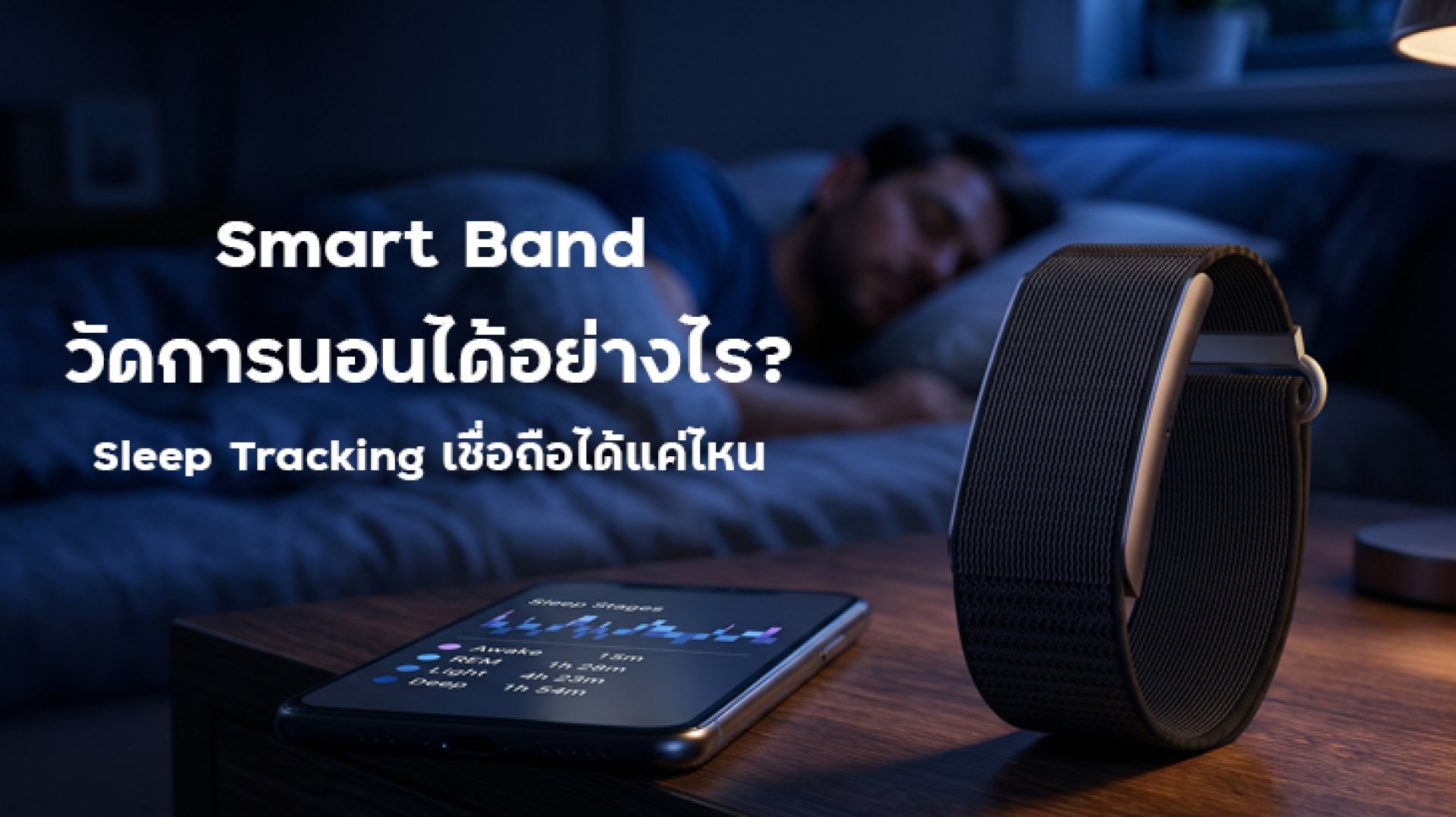
Have you ever wondered how wearing a Smart Band to bed can tell you how many hours you slept, how long you spent in deep sleep, or how many times you woke up during the night? Smart Band Sleep Tracking uses built-in sensors to monitor changes in your body while you sleep. It then processes this information into an easy-to-understand sleep report. But how accurate is this data, and how much should you trust the results displayed on your screen?
The truth is that a Smart Band does not read brain waves like the sleep monitoring equipment used in hospitals. Instead, it relies on indirect signals such as wrist movement, heart rate, and changes in pulse patterns to estimate which sleep stage your body may be experiencing. Before using Sleep Tracking data to evaluate your sleep quality, it is worth understanding how the technology works.
How Does a Smart Band Track Sleep? What Sensors Does It Use?
The basic principle behind Smart Band Sleep Tracking is to continuously collect information from your body while you rest. The device's algorithm then analyzes different types of data to estimate when you fall asleep, when you wake up, and how your sleep progresses throughout the night. The main sensors commonly found in Smart Bands include the following.
1. Motion Sensor (Accelerometer)
An accelerometer detects movement and changes in wrist position, such as turning over, moving your arms, or remaining still for an extended period. This information helps the Smart Band estimate whether you are moving, resting, or possibly falling asleep.
For example, if your wrist remains still for a long time, the device may assume that you have fallen asleep. However, staying still does not always mean you are sleeping. You could be reading, using your phone in bed, or simply resting your eyes. This is why motion detection alone is not enough to provide a detailed assessment of sleep.
2. Heart Rate Sensor
Heart rate sensors commonly use a light-based technology called PPG (Photoplethysmography). The sensor shines light onto your skin and detects changes in blood volume beneath the wrist to estimate your heart rate.
During sleep, your heart rate naturally changes depending on your sleep stage. For example, your heart rate generally becomes slower during deep sleep compared with periods of wakefulness or REM sleep. When combined with motion data, this information helps Smart Band Sleep Tracking identify sleep patterns more effectively.
3. Blood Oxygen Sensor (SpO2)
Some Smart Bands include a sensor that estimates blood oxygen saturation, commonly known as SpO2. It uses light at different wavelengths to estimate the proportion of oxygen carried by hemoglobin in your blood. This information may be included in sleep-related health reports.
However, not every Smart Band supports SpO2 monitoring during sleep. Readings from consumer wearables should not be used to diagnose sleep apnea or other respiratory conditions. If you experience unusual symptoms, consult a healthcare professional.
4. Sensors and Data Processing Algorithms
Beyond the sensors themselves, the manufacturer's algorithm plays an important role in sleep tracking. The device combines information from multiple sources, including movement, heart rate, and pulse patterns, to estimate different sleep stages.
This explains why two Smart Bands from different brands may produce different sleep reports for the same night, even if they use similar types of sensors.
What Sleep Stages Can Sleep Tracking Identify?
After Smart Band Sleep Tracking has collected and processed the data, the companion app usually displays the results as a graph or timeline. These reports divide your sleep into different stages to help you understand how your body rested throughout the night. Most devices identify four main sleep stages.
1. Awake
This stage represents periods when you are awake, either before falling asleep or after waking up during the night. Examples include getting up to use the bathroom, turning over, or briefly waking up before falling asleep again. A Smart Band estimates these periods based on movement and changes in physiological signals.
Waking up during the night is normal and does not necessarily indicate a sleep problem. However, if you wake up frequently and regularly feel tired in the morning, it may be worth reviewing your sleep habits.
2. Light Sleep
Light sleep is the stage in which your body begins to relax. Your heart rate and breathing generally slow down compared with when you are awake, but you can still be woken up relatively easily. This is a normal part of the sleep cycle, not a sign of poor-quality sleep.
Smart Band Sleep Tracking reports often show light sleep as one portion of your total sleep time. The proportion can vary depending on age, health, and individual sleep habits.
3. Deep Sleep
Deep sleep is a stage in which your body enters a more restorative state. Several bodily functions slow down, including heart rate and breathing. This stage plays an important role in physical recovery and overall rest.
Many people immediately open their sleep app to check how many minutes they spent in deep sleep. However, sleep quality should not be judged by this number alone. A Smart Band estimates sleep stages using indirect signals rather than measuring brain activity directly.
4. REM Sleep
REM stands for Rapid Eye Movement. During this sleep stage, your eyes move rapidly, and dreaming commonly occurs. Brain activity during REM sleep differs from that during deep sleep, and this stage is associated with learning and memory processes.
A Smart Band estimates REM sleep using patterns in heart rate and movement. However, it cannot directly detect brain activity in the same way as clinical sleep monitoring equipment.
How Accurate Is Smart Band Sleep Tracking?
The short answer is that Smart Band Sleep Tracking is reasonably useful for monitoring sleep trends, but it should not be expected to match the accuracy of medical-grade equipment. This is particularly true when distinguishing between light sleep, deep sleep, and REM sleep, because these stages are estimated using indirect measurements.
If you want to know approximately how many hours you slept, when you went to bed, or whether you woke up more frequently than usual, a Smart Band Sleep Tracking report can provide useful insights. However, if you need a detailed assessment of sleep stages or want to investigate a possible sleep disorder, consumer wearables still have limitations.
What Smart Bands Generally Do Well
- Estimate total sleep duration: Help track approximately when you fall asleep and wake up.
- Identify sleep trends: Compare whether you are sleeping less or getting more consistent rest over time.
- Monitor nighttime awakenings: Estimate periods of movement or possible waking during the night.
- Track heart rate: Show changes in heart rate during rest on supported models.
- Encourage consistent sleep habits: Use historical data to help you maintain regular bedtimes and wake-up times.
Limitations to Understand Before Trusting Sleep Tracking Results
- Sleep stage estimates are not equally accurate: Deep, light, and REM sleep estimates can be inaccurate because the device does not directly measure brain waves.
- Being still can be mistaken for sleeping: If you are reading or resting in bed, the device may incorrectly assume that you have fallen asleep.
- Brief awakenings may go undetected: Short periods of wakefulness without much movement may not be recorded.
- Results vary by model and brand: Sensor quality and processing algorithms differ between manufacturers.
- Wearing position matters: A loose strap or poor sensor contact can reduce the accuracy of collected data.
What Can Cause Inaccurate Sleep Tracking Results?
Even if you own a Smart Band with Sleep Tracking, the results may not be equally accurate every night. Several factors can affect how the device collects and processes information.
1. Wearing the Smart Band Too Loosely
If the strap is loose and the sensor moves around or fails to maintain proper skin contact, optical heart rate measurements may contain signal noise. This can affect the data used to estimate your sleep stages. Adjust the strap so it fits securely without being uncomfortably tight.
2. Frequent Movement or Turning During Sleep
Movement during sleep may cause the system to interpret your activity as waking up, even when you are still asleep. This can be particularly noticeable for people who frequently change sleeping positions or move around during the night.
3. Low Battery or Disabled Sleep Tracking
Some Smart Bands require specific health monitoring or heart rate settings to be enabled. If these features are disabled or the battery runs out during the night, the device may not collect complete data. Check your settings and battery level before going to bed.
4. Your Pre-Sleep Habits Affect Sleep Patterns
Consuming caffeine in the evening, spending too much time looking at screens, experiencing stress, or following an irregular sleep schedule can affect your sleep patterns. As a result, the data recorded by your Smart Band may vary from night to night. This does not necessarily mean that the sensor is malfunctioning.
How to Use Smart Band Sleep Tracking More Reliably
To get more useful results from Smart Band Sleep Tracking, you do not necessarily need to buy the most expensive model. Start by wearing the device correctly, checking its settings, and using the data consistently to identify trends rather than judging your sleep based on a single night.
- Wear the band securely: Make sure the sensor maintains good skin contact without being too tight or disturbing your sleep.
- Enable sleep monitoring: Check that your device supports Sleep Tracking and that the feature is properly enabled in the app.
- Check the battery before bedtime: Make sure there is enough power to monitor your sleep throughout the night.
- Wear it consistently: Track your sleep for several days or weeks to identify patterns instead of relying on one night's results.
- Consider multiple indicators: Look at sleep duration, heart rate, and how refreshed you feel after waking up.
- Update the app and firmware: Keep your device updated to ensure it operates with the latest supported software.
What Sleep Tracking Features Should You Look for in a Smart Band?
If you are planning to buy a Smart Band for sleep monitoring, look beyond the numbers and marketing claims on the packaging. Some models only track total sleep duration, while others provide additional information about sleep stages, heart rate, or blood oxygen levels.
| Feature | Benefits | What to Check |
|---|---|---|
| Sleep Tracking | Monitors sleep duration and general sleep patterns. | Does it support automatic sleep recording? |
| Sleep Stages | Estimates light sleep, deep sleep, and REM sleep. | Does it provide a breakdown of sleep stages? |
| Heart Rate Monitoring | Tracks heart rate while resting. | Does it measure continuously or at intervals? |
| SpO2 Monitoring | Estimates blood oxygen saturation. | Does it support monitoring during sleep? |
| Sleep Report | Displays sleep statistics and historical trends. | Does the app provide daily and weekly reports? |
Comfort is another important factor. If the device is too large, heavy, or irritating against your skin, you may not want to wear it throughout the night. A useful Smart Band should combine practical tracking features with a design that feels comfortable enough for regular use.
Can Sleep Tracking Detect Insomnia or Sleep Apnea?
A Smart Band can help you observe sleep trends and identify certain changes in your sleeping patterns. However, it cannot replace a medical diagnosis. Even if a model includes SpO2 monitoring or alerts for unusual readings, that does not mean it can confirm whether you have sleep apnea.
Medical sleep studies, such as Polysomnography (PSG), measure several body systems simultaneously. These may include brain activity, eye movements, muscle activity, breathing patterns, and blood oxygen levels. This allows healthcare professionals to assess sleep in much greater detail than ordinary consumer wearables.
If you experience loud snoring, wake up gasping for air, feel excessively sleepy during the day, or regularly wake up feeling unrefreshed despite getting enough sleep, consult a healthcare professional for further evaluation. Do not use a Smart Band's Sleep Score as a diagnostic tool.
Conclusion: Is Smart Band Sleep Tracking Reliable?
In summary, Smart Band Sleep Tracking works by using sensors to detect movement and heart rate, along with other measurements on supported models. The device processes this information through an algorithm to estimate different sleep stages, including light sleep, deep sleep, and REM sleep.
The main benefit of Sleep Tracking is that it helps you understand your sleeping habits more easily. You can see whether you slept less than usual, woke up frequently, or experienced changes in your regular sleep patterns. However, you should not expect every measurement, especially deep sleep and REM estimates, to be 100% accurate because the device does not directly measure brain activity.
The best approach is to review your sleep data over several days and consider it alongside how you feel and your daily habits. For general wellness tracking, a Smart Band is a convenient tool. But if you suspect a sleep disorder or experience unusual symptoms, seek an assessment from a healthcare professional.
Frequently Asked Questions About Smart Band Sleep Tracking (FAQ)
1. Do I Need to Wear a Smart Band Every Night?
No, you do not have to wear it every night. However, wearing it regularly provides more data for comparing your sleep patterns over time. Keep the band and your skin clean, and remove the device if you experience irritation.
2. How Does a Smart Band Know When I Am in Deep Sleep?
The system analyzes several indicators, such as wrist movement and heart rate patterns, and uses an algorithm to estimate your sleep stage. However, it does not directly measure brain waves, so the results may not always be accurate.
3. Why Do Different Smart Band Brands Show Different Sleep Results?
Different brands may use different sensors, algorithms, and data processing methods. Even when monitoring the same night of sleep, their estimates of light sleep, deep sleep, and REM sleep may not match.
4. Does a High Sleep Score Always Mean I Had Good Sleep?
Not necessarily. A Sleep Score is calculated using the manufacturer's own criteria and should be treated as a reference rather than a complete measure of your health. Consider how refreshed and alert you feel after waking up as well.
5. Can a Smart Band Track Sleep Without Connecting to a Phone?
Many Smart Bands can record sleep data without maintaining a constant connection to a smartphone. The device can then synchronize the recorded information with its companion app when a connection becomes available. However, this depends on the specific model and operating system, so check the manufacturer's instructions.