Can You Charge a Smart Watch with a Power Bank? Safety Tips
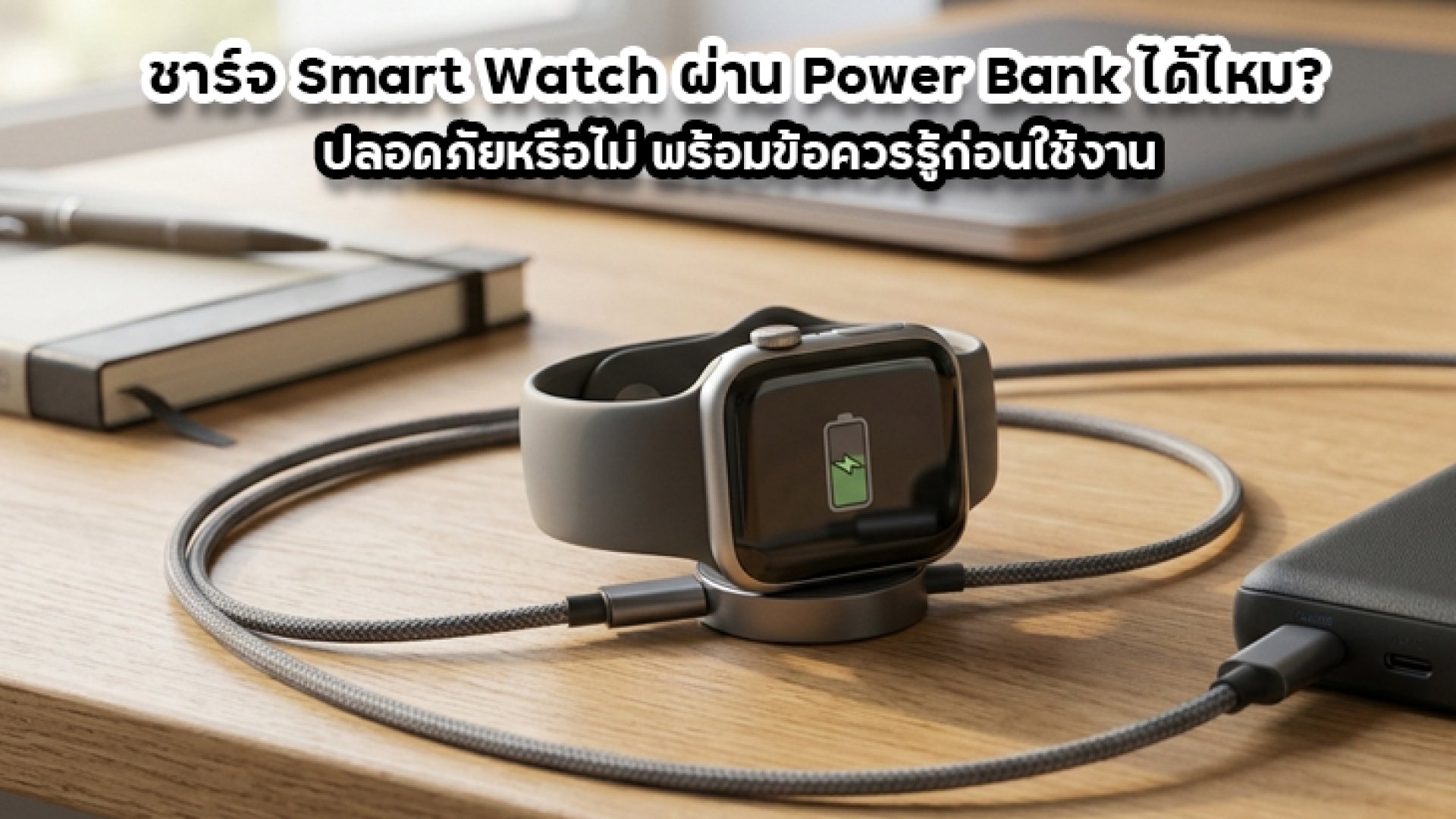
A power bank has become an essential accessory for people who travel frequently, work remotely, or spend long hours away from a wall outlet. As smartwatches become part of everyday life, many users wonder: Can you safely charge a Smart Watch with a power bank? Will it damage the battery or reduce the lifespan of the device?
The short answer is yes. Most Smart Watches can be safely charged using a quality power bank, provided that it delivers a stable USB output and you use the original charging cable or a compatible magnetic charging dock designed for your smartwatch model.
Unlike smartphones or tablets, Smart Watches require relatively little power during charging. Their built-in Battery Management System (BMS) regulates the charging voltage and current automatically, meaning the watch only draws the amount of power it actually needs. This makes charging from a power bank just as safe as charging from a USB wall charger or computer in most situations.
However, there are still several important precautions to follow. Choosing a certified power bank, using the correct charging accessories, and avoiding charging when the watch or charging contacts are wet can help extend battery life and reduce the risk of hardware damage.
In this guide, you'll learn whether charging a Smart Watch with a power bank is safe, how fast charging affects your device, what type of power bank is recommended, and the best practices for protecting your smartwatch battery over the long term.
Can You Charge a Smart Watch with a Power Bank?
Yes. Nearly all modern Smart Watches can be charged through a power bank without any issues, as long as the power bank provides a standard 5V USB output and you use the proper charging cable or magnetic charging dock that is compatible with your smartwatch.
Many modern power banks support high-power outputs such as 20W, 30W, 45W, 65W, or even higher. Fortunately, this does not mean your Smart Watch will receive excessive power. The charging controller inside the watch automatically limits the charging current to the level specified by the manufacturer.
What Type of Power Bank Is Best for a Smart Watch?
Almost any USB power bank can charge a Smart Watch, but choosing a high-quality model with multiple safety protections is strongly recommended. A reliable power bank delivers stable voltage, prevents overheating, and minimizes charging interruptions.
If you travel frequently, a power bank with a capacity between 10,000mAh and 20,000mAh is generally the best choice. It provides enough capacity to recharge your Smart Watch multiple times while also charging your smartphone, wireless earbuds, or other portable devices.
| Feature | Recommendation |
|---|---|
| Output Voltage | Standard 5V USB Output |
| Safety Protection | Over Voltage, Over Current, Short Circuit, Temperature Protection |
| Battery Capacity | 10,00020,000mAh for travel and everyday use |
| Charging Cable | Use the original or a compatible charging cable designed for your Smart Watch |
Will a Fast-Charging Power Bank Charge a Smart Watch Faster?
Many people assume that using a power bank that supports fast-charging technologies such as USB Power Delivery (PD) or Qualcomm Quick Charge (QC) will significantly reduce the charging time of a Smart Watch. In reality, most Smart Watches charge only at the speed specified by the manufacturer.
Even if your power bank is capable of delivering 20W, 30W, 45W, 65W, or more, the smartwatch's internal charging circuit automatically regulates how much power it accepts. The device will only draw the voltage and current it is designed to handle, making high-wattage power banks safe when they comply with recognized safety standards.
In other words, using a more powerful power bank does not force additional power into the Smart Watch. Instead, the watch determines its own charging requirements and limits the power accordingly.
Does Charging a Smart Watch with a Power Bank Damage the Battery?
Generally, no. Charging your Smart Watch with a high-quality power bank does not shorten battery life any more than charging with a standard USB wall charger. Modern Smart Watches are equipped with a Battery Management System (BMS) that carefully controls charging voltage, current, and temperature throughout the charging process.
The lifespan of a lithium-ion battery is affected far more by charging habits and environmental conditions than by the power source itself. Factors such as excessive heat, frequent deep discharges, poor-quality charging accessories, or prolonged exposure to high temperatures have a much greater impact on long-term battery health.
| Factor | Impact on Battery Life |
|---|---|
| Certified, high-quality power bank | Safe for everyday charging |
| Low-quality or uncertified power bank | May provide unstable voltage or current |
| High operating temperature | Can accelerate battery degradation |
| Charging while the Smart Watch is wet | May damage charging contacts and internal circuits |
| Damaged or worn charging cable | May result in unstable or interrupted charging |
Safety Tips for Charging a Smart Watch with a Power Bank
Charging a Smart Watch with a power bank is simple and convenient, especially while traveling. However, following a few basic precautions can help maximize charging efficiency and protect both your smartwatch and the power bank.
- Always use the original charging cable or a compatible magnetic charging dock designed for your Smart Watch model.
- Do not charge the watch if it or the charging contacts are wet or exposed to moisture.
- Avoid leaving the power bank in direct sunlight, inside a hot vehicle, or in other high-temperature environments.
- Regularly inspect the USB port, charging cable, and magnetic charging contacts for dust, corrosion, or debris.
- Replace charging cables that are bent, frayed, or physically damaged.
- If either the Smart Watch or the power bank becomes unusually hot during charging, disconnect it immediately and inspect the equipment before using it again.
How Many Times Can a Power Bank Charge a Smart Watch?
Most Smart Watches are equipped with batteries ranging from approximately 200mAh to 600mAh, which are significantly smaller than those found in smartphones. As a result, even a compact power bank can recharge a smartwatch many times before it needs to be recharged itself.
However, the actual number of charging cycles depends on several factors, including the battery capacity of the Smart Watch, the efficiency of the power bank, charging losses, and environmental conditions. In practice, power banks typically deliver around 70%85% of their rated capacity due to voltage conversion and energy loss.
| Power Bank Capacity | Estimated Smart Watch Charges* | Recommended For |
|---|---|---|
| 5,000mAh | Approximately 815 charges | Daily use |
| 10,000mAh | Approximately 1630 charges | Business trips or 25 days of travel |
| 20,000mAh | Approximately 3060 charges | Extended travel, outdoor activities, or multiple devices |
*Estimated charging cycles vary depending on the Smart Watch battery capacity, charging efficiency, and actual power bank performance.
How to Charge a Smart Watch with a Power Bank Properly
Charging a Smart Watch with a power bank is almost identical to charging it with a USB wall adapter. Following these simple steps helps ensure safe, stable, and efficient charging while protecting your device over the long term.
- Ensure that both the Smart Watch and the charging dock or cable are completely dry and free from dust or moisture.
- Use the original charging cable or a compatible magnetic charging dock designed specifically for your smartwatch model.
- Connect the charging cable securely to a certified power bank.
- Position the Smart Watch correctly so the magnetic charging contacts align properly.
- Verify that the charging indicator appears on the watch display.
- Disconnect the charger after the battery reaches 100% to help minimize unnecessary heat buildup.
Conclusion
Yes, you can safely charge a Smart Watch with a power bank as long as you use a high-quality power bank and the correct charging cable or magnetic charging dock. Even if the power bank supports fast charging technologies such as USB PD or Quick Charge, your Smart Watch will only draw the amount of power its internal charging system is designed to accept.
To maximize battery lifespan and charging safety, always use certified charging accessories, avoid charging the watch when it is wet, inspect the charging contacts regularly, and keep both the Smart Watch and the power bank away from excessive heat. Following these simple practices can help extend the life of your smartwatch battery and ensure reliable performance for years to come.
- You can safely charge a Smart Watch with a power bank.
- A high-quality power bank does not shorten battery life.
- Fast-charging power banks do not necessarily charge Smart Watches faster.
- Always use the original or a compatible charging cable.
- Never charge a Smart Watch while it or the charging contacts are still wet.
Frequently Asked Questions (FAQ)
Can you charge a Smart Watch with a power bank?
Yes. Most Smart Watches can be safely charged using a quality power bank, provided you use the original or a compatible charging cable or magnetic charging dock designed for your smartwatch.
Will a fast-charging power bank charge my Smart Watch faster?
Usually not. Most Smart Watches only draw the amount of power supported by their internal charging circuitry, regardless of how much power the power bank can deliver.
Does charging a Smart Watch with a power bank damage the battery?
No. Charging from a certified power bank is generally just as safe as charging from a wall charger. Battery lifespan is affected more by heat, charging habits, and battery age than by the power source itself.
How many times can a 10,000mAh power bank charge a Smart Watch?
Depending on the watch's battery capacity and the efficiency of the power bank, a 10,000mAh model can typically recharge a Smart Watch approximately 1630 times.
Can I use a 20W, 30W, or 65W power bank to charge a Smart Watch?
Yes. A Smart Watch only draws the amount of power it requires, so using a higher-wattage power bank is generally safe if the device meets recognized safety standards.
Which charging cable should I use?
For the best charging performance and safety, always use the original charging cable or a compatible charging dock specifically designed for your Smart Watch model.
Is it safe to charge a Smart Watch with a power bank while traveling?
Yes. A quality power bank is an excellent portable charging solution for business trips, vacations, outdoor activities, and emergency situations.
Can I charge a Smart Watch with a power bank after it gets wet?
No. Wait until both the Smart Watch and the charging contacts are completely dry before charging to prevent corrosion or possible damage to the charging circuitry.
References
- USB Implementers Forum (USB-IF). USB Type-C® and USB Power Delivery Specifications.
https://www.usb.org/ - Battery University. Charging Lithium-ion Batteries (BU-409).
https://batteryuniversity.com/article/bu-409-charging-lithium-ion - Battery University. How to Prolong Lithium-based Batteries (BU-808).
https://batteryuniversity.com/article/bu-808-how-to-prolong-lithium-based-batteries - Panasonic Energy. Lithium-ion Battery Safety and Care.
https://energy.panasonic.com/ - Apple Support. Charge Apple Watch.
https://support.apple.com/guide/watch/charge-apple-watch-apd2b717523a/watchos - Samsung Support. Charge Your Galaxy Watch.
https://www.samsung.com/support/ - Garmin Support Center. Charging Your Garmin Watch.
https://support.garmin.com/