Does a Smartwatch with Built-in GPS Need Your Phone for Running? What to Check Before Buying
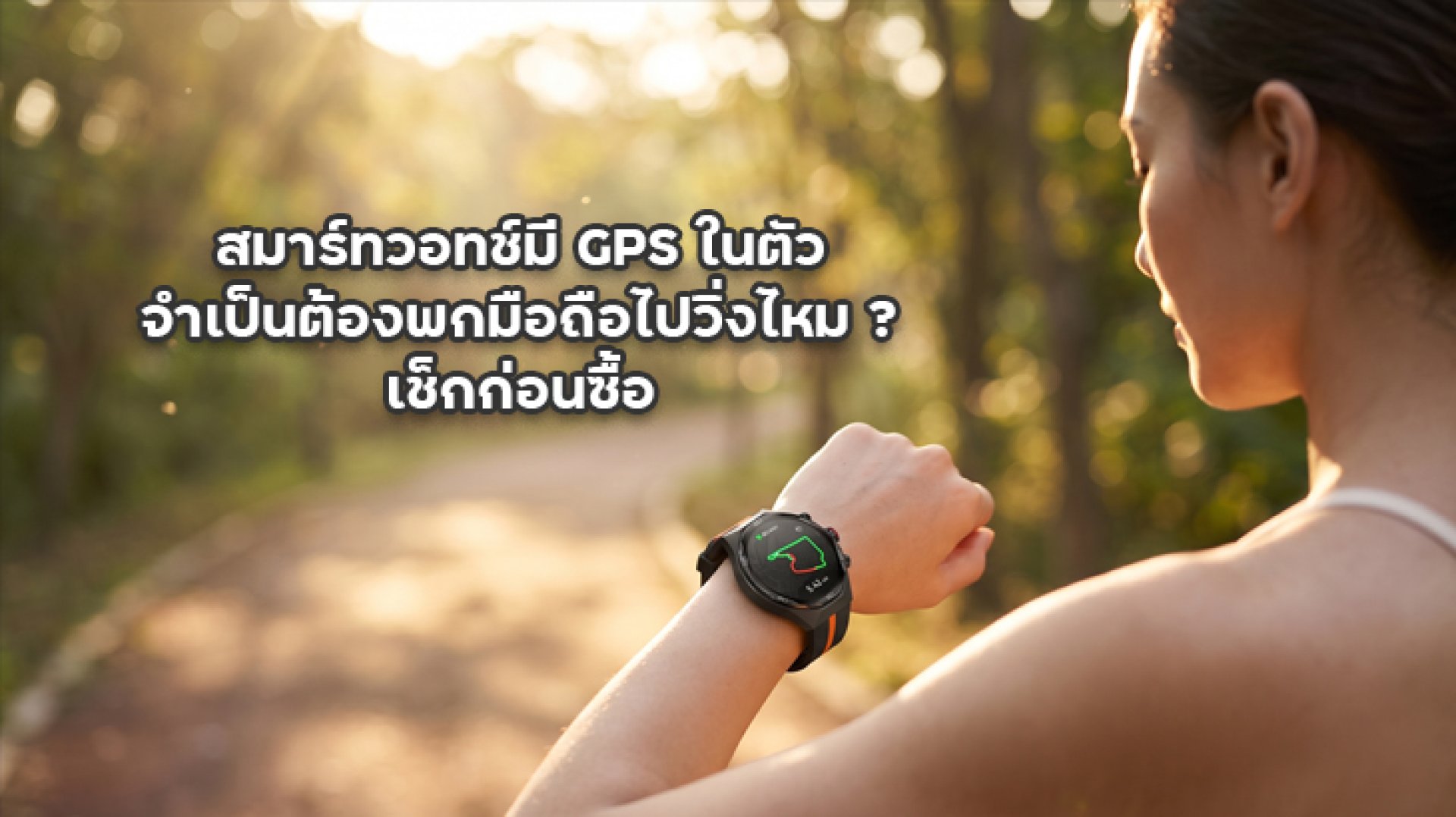
Does a smartwatch with built-in GPS mean you can leave your phone at home when you go running? In most cases, yes, if you only need to track your distance, pace, and running route. A smartwatch with built-in GPS can receive satellite signals and record your workout independently. However, a watch that relies on your phone's GPS, often called Connected GPS, generally needs your smartphone nearby to track your location.
Before buying a running smartwatch, it is important to check which GPS system it actually uses. Two watches may offer the same running mode but have very different capabilities when used without a phone. This guide explains the differences, the benefits and limitations of built-in GPS, and the features worth checking before you buy.
What Is Built-in GPS on a Smartwatch?
Built-in GPS is a positioning system integrated into the smartwatch itself. It allows the watch to determine your location using satellite signals while you run, walk, cycle, or participate in other outdoor activities without relying on your smartphone's GPS receiver.
When you start a running workout, the watch records location data and uses it to calculate or track information such as:
- Distance: How far you have run, usually displayed in kilometers or miles.
- Pace: How long it takes you to cover a kilometer or mile.
- Speed: Your movement speed during an outdoor activity.
- Running route: A route map that may become available after syncing your workout with a compatible app.
- Split times and distance: Running statistics that help you review your performance across different sections of a workout.
However, built-in GPS does not automatically mean that every smartwatch supports full navigation maps or can display maps without a phone. Those capabilities depend on the model and its software.
Built-in GPS vs. Connected GPS: What Is the Difference?
The main difference between a smartwatch with built-in GPS and one using Connected GPS is where the location data comes from. Built-in GPS receives satellite signals directly through the watch, while Connected GPS relies on the GPS system of a paired smartphone.
| Feature | Built-in GPS | Connected GPS |
|---|---|---|
| Phone required for route tracking | Usually no | Usually yes |
| Positioning source | Satellite signals received by the watch | GPS from a connected smartphone |
| Recording a running route | Can record a route without carrying a phone during the workout | Depends on the phone connection and tracking implementation |
| Power consumption | GPS tracking uses additional watch battery power | Uses the phone's GPS and may also affect phone battery life |
| Best suited for | Runners who want to travel light | Runners who already carry their phones |
| Calls and messages | Not automatically supported; depends on Bluetooth calling, LTE, or other features | May receive notifications through the connected phone |
Important: Connected GPS does not necessarily mean a watch has no GPS hardware in every case. Feature names and implementations vary by brand. If you want to run without carrying your phone, check the manufacturer's specifications to confirm that the exact model has built-in GPS.
What Can You Do with Built-in GPS Without a Phone?
Many smartwatches with built-in GPS can record outdoor workouts independently. However, some features still require a smartphone, an internet connection, or a compatible subscription.
1. Track Distance and Pace
A watch with built-in GPS can record running time, distance, and pace without a phone. After your workout, you can usually reconnect the watch to a compatible smartphone app to synchronize your activity data. The available statistics and syncing process depend on the device and its software.
2. Review Your Running Route Later
A compatible watch can store GPS location data while you exercise. Once you sync the workout with its companion app, you may be able to review the route on a map alongside your distance and other performance statistics.
Keep in mind that recording a route is not the same as having live map navigation. Viewing maps on your wrist, planning a route, and navigating back to your starting point are separate features that may not be available on every model.
3. Track GPS Without a Continuous Internet Connection
GPS uses satellite signals to determine your location, so basic positioning does not normally require a continuous mobile internet connection or an active SIM card. However, downloading maps, syncing workout data, streaming music, and receiving certain online notifications may require internet access or a connection to your phone.
If Your Smartwatch Has Built-in GPS, Why Might You Still Need a Phone?
Although built-in GPS allows you to run without carrying a smartphone, it does not replace every phone function. Check the watch's specifications if you want to use any of the following features during your run.
- Making or receiving calls: Some watches use a Bluetooth connection to your phone, while others support LTE or eSIM with a compatible mobile service.
- Receiving messages and notifications: Availability depends on the operating system, connection, and notification settings.
- Streaming music: Streaming usually requires internet access, but some watches can store music for offline playback.
- Using maps and navigation: Online maps may require internet access, while selected models support downloadable offline maps.
- Emergency communication: Location sharing or emergency calling may require a phone, cellular coverage, or a supported service, depending on the device and country.
If you run around a familiar park and only want to track your workout, built-in GPS may be all you need. For long-distance runs or unfamiliar routes, also consider how you would contact someone in an emergency. Let someone know your planned route when appropriate.
How Accurate Is Built-in GPS? What Should You Check?
Having built-in GPS does not guarantee that every smartwatch will record distance equally accurately. Performance depends on the hardware, antenna design, software, satellite systems supported, and surrounding environment.
Supported Satellite Systems
Some watches support GPS alone, while others support multiple satellite systems, such as GPS, Galileo, GLONASS, or BeiDou. Access to multiple systems may improve satellite availability in certain situations, but it does not guarantee better accuracy in every environment.
Dual-band or Multi-band GPS
If you frequently run in cities with tall buildings or areas where satellite signals are obstructed or reflected, dual-band or multi-band GPS may improve positioning accuracy in some conditions. Actual performance still depends on the watch's design, software, and surroundings.
Your Running Environment
Open areas generally provide better conditions for satellite reception than places with tall buildings, dense tree cover, or tunnels. For more consistent tracking, allow the watch to acquire a GPS signal before starting your run and follow the manufacturer's recommended positioning settings.
Does Built-in GPS Drain the Battery?
GPS tracking can increase battery consumption, especially during long workouts or when you use other features at the same time, such as heart-rate monitoring, music playback, and frequent screen activation.
Before buying, compare the manufacturer's battery estimates for normal smartwatch use and GPS workout mode. These figures can differ significantly. If you run long distances or train for several hours at a time, GPS-mode battery life is more relevant than the general battery-life figure alone.
How to Choose a GPS Smartwatch for Running
If you are shopping for a running smartwatch, do not focus only on the price or number of sports modes. Start with how you plan to use the watch, then check these features.
- Built-in GPS: Essential if you want to record routes without carrying your phone.
- GPS accuracy: Check supported satellite systems and consider multi-band GPS if you often run in cities or areas with difficult reception.
- GPS-mode battery life: Choose a model that can handle your typical running duration and training schedule.
- Heart-rate monitoring: Useful for tracking exercise intensity, although accuracy depends on the sensor and how the watch fits.
- App compatibility: Confirm that your preferred fitness app supports the watch and your smartphone.
- Music and calling: If you want to leave your phone behind, check offline music storage, headphone compatibility, and LTE or eSIM support separately.
- Weight and comfort: Choose a watch that feels comfortable and stays securely in place throughout your run.
Conclusion: Do You Need to Carry Your Phone When Running with Built-in GPS?
If your main goal is to record distance, pace, time, and running routes, a smartwatch with built-in GPS can usually track your workout without requiring you to carry your phone. You can sync the data with a compatible app afterward. A watch that relies on Connected GPS, however, generally needs a connected smartphone to obtain location data.
Before buying, check built-in GPS support, battery life in GPS mode, and the features you want to use without your phone, such as offline music, calls, and navigation. Built-in GPS provides independent positioning, but it does not automatically give a smartwatch every function available on a smartphone.
Frequently Asked Questions (FAQ)
Does a smartwatch with built-in GPS need Bluetooth turned on all the time?
Generally, no. Built-in GPS can receive satellite signals and record a running workout without Bluetooth. Bluetooth may still be needed for headphones, syncing data, or features that depend on a connected phone. Requirements vary by model and use case.
Can a GPS smartwatch record a run without internet access?
Many smartwatches with built-in GPS can record distance and route data without an internet connection during the workout. Syncing data, downloading maps, and using online services may require an internet connection afterward.
Can I make calls without my phone if my smartwatch has built-in GPS?
Not necessarily. GPS and calling are separate features. To make calls without carrying your phone, you generally need a watch that supports cellular connectivity, such as LTE or eSIM, along with a compatible service plan where supported.
Is Connected GPS suitable for runners?
Yes. Connected GPS can be suitable for runners who already carry their phones and want to track distance and routes. If you prefer running without a phone, choose a smartwatch with built-in GPS.
What is the difference between built-in GPS and multi-band GPS?
Built-in GPS means the watch has its own satellite-positioning hardware. Multi-band GPS means it supports multiple satellite signal frequencies, which may improve accuracy in certain environments. A watch with built-in GPS does not necessarily support multi-band GPS.