Portable Fan: Strong Airflow vs Long Battery Life — Which Should You Choose?
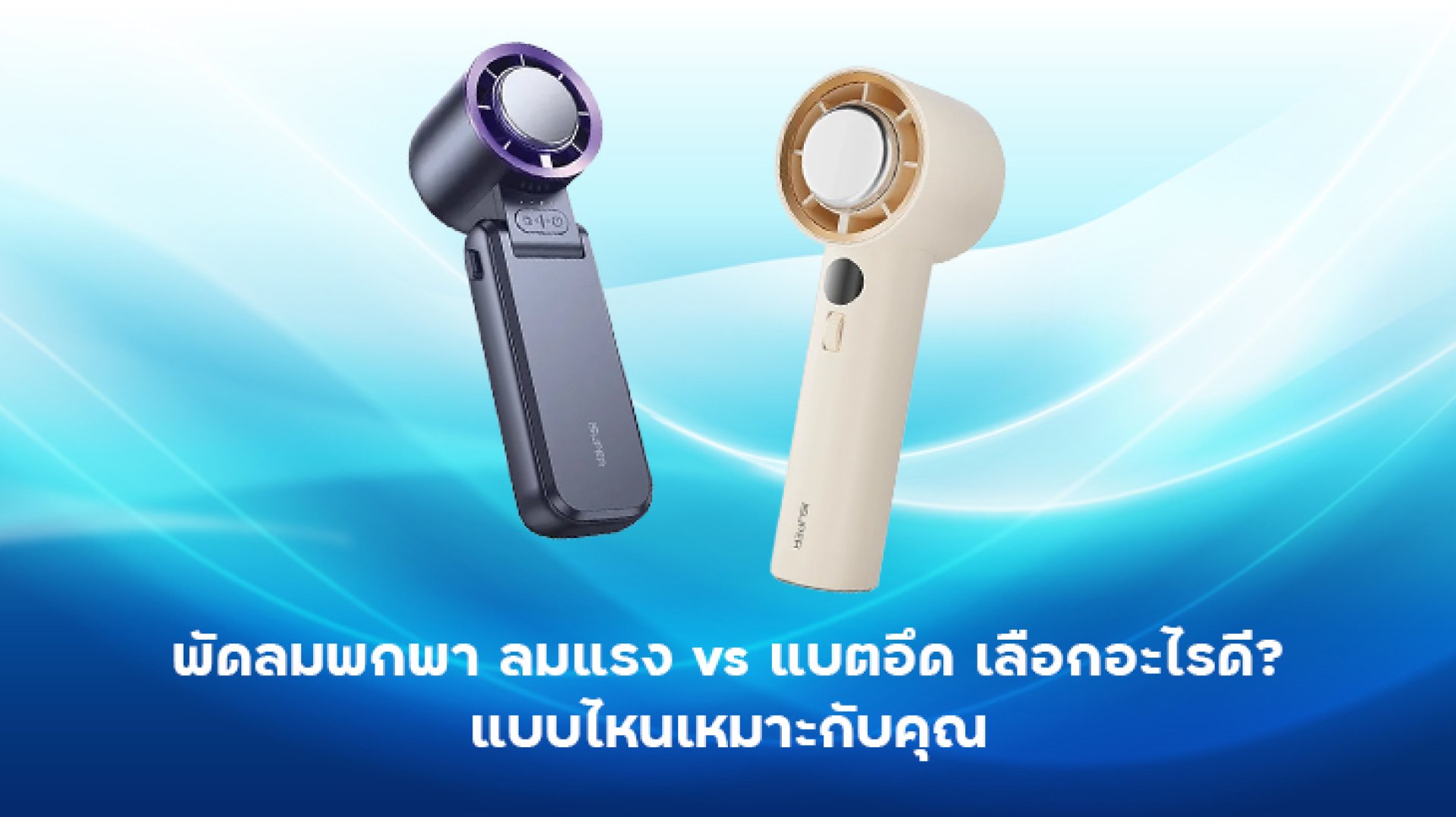
When shopping for a portable fan, many people face the same question: Should I choose stronger airflow or longer battery life? Some portable fans focus on powerful airflow but may run for a shorter period, while others prioritize battery life and can operate for many hours but may not provide the strong airflow some users want.
The truth is that there is no single answer to which one is better. When comparing a portable fan with strong airflow vs long battery life, the right choice depends on how you plan to use it. This guide compares airflow, battery capacity, runtime, and real-world usage scenarios to help you choose the right portable fan.
Portable Fan: Strong Airflow vs Long Battery Life What Is the Difference?
First, it is important to understand that strong airflow and long battery life are two different characteristics.
- Strong airflow focuses on the speed and volume of air produced by the fan, helping you feel cooler more quickly.
- Long battery life focuses on how long the fan can operate on a single charge.
A powerful portable fan may consume more power, especially when operating at its highest speed. Therefore, battery capacity alone cannot determine exactly how long a fan will run.
Likewise, a fan with a larger battery does not automatically produce stronger airflow. Motor efficiency, blade design, airflow channels, and power management also affect performance.
Want a Powerful Portable Fan? What Should You Look For?
If your priority is strong airflow, do not focus only on the battery capacity. Look at specifications that are directly related to airflow performance.
1. Check Air Velocity (m/s)
Air velocity, measured in meters per second (m/s), indicates how quickly air moves from the fan. A higher air velocity generally indicates a stronger stream of air.
For example, if a portable fan specifies a maximum airflow speed of 9 m/s, this can be used as a useful reference when comparing it with other portable fans.
2. Check Motor Speed (RPM)
RPM, or revolutions per minute, indicates how quickly the motor rotates. It can provide useful information about motor performance, but RPM alone should not be used to determine which fan produces stronger airflow.
Blade design, airflow channels, and motor efficiency all affect the final airflow output. If available, consider RPM together with m/s rather than looking at either specification alone.
3. Check the Number of Speed Levels
Many portable fans offer around 34 speed levels, while some models provide much finer adjustment.
A larger number of speed levels does not automatically mean stronger airflow. However, it gives you more control over the airflow depending on the situationfor example, using a low setting indoors and increasing the speed when outdoors.
If Battery Life Is Your Priority, What Should You Check?
For users looking for a portable fan with long battery life, battery capacity is usually one of the first specifications they check. Capacity is commonly measured in mAh.
Does a Higher mAh Rating Always Mean Longer Runtime?
Not necessarily.
mAh indicates battery capacity, but actual runtime depends on several factors, including:
- Selected fan speed
- Motor power consumption
- Power management efficiency
- Whether the cooling function is activated
- Operating conditions and surrounding temperature
Therefore, when choosing a portable fan with long battery life, check both the mAh rating and the manufacturer's stated runtime. It is also important to check the conditions under which the maximum runtime was measured.
Why Does a Powerful Portable Fan Use More Battery?
Think of it simply: when you increase the fan speed, the motor has to work harder and generally consumes more power.
For example, this combination:
- Maximum fan speed
- Cooling function activated
- Continuous operation for a long period
will generally consume more energy than operating the fan at a lower speed without additional functions.
That is why specifications such as up to 9 hours or up to 11 hours should always be read together with their testing conditions. They do not necessarily mean that the fan can operate at maximum speed with every function activated for the entire stated period.
For Office Use, Should You Choose Strong Airflow or Long Battery Life?
If you mainly use a portable fan in an office, bedroom, or air-conditioned café, a model with moderate airflow and longer battery life may be more suitable.
You may not need maximum airflow continuously, and operating at a lower speed can help extend battery life.
Tip: Choose a model with multiple airflow levels. This gives you the flexibility to increase or decrease the airflow depending on the room temperature and situation.
For Outdoor Use, Should You Choose Strong Airflow or Long Battery Life?
For outdoor activities such as walking, events, markets, concerts, or traveling in hot weather, airflow strength becomes more important.
Outdoor environments do not have the benefit of air conditioning, and natural airflow can reduce the effectiveness of a small fan. Having sufficient airflow can therefore help you feel cooler more quickly.
However, if you expect to stay outdoors for several hours, you should balance airflow performance with battery capacity. There is usually no need to run the fan at maximum speed continuously.
What Type of Portable Fan Is Best for Frequent Travelers?
For frequent travelers, including domestic and international trips, it is better to look for a balanced combination of features rather than choosing the most powerful or largest-battery model.
A travel-friendly portable fan should ideally offer:
- Compact dimensions
- Reasonable weight
- Suitable battery capacity
- Multiple airflow levels
- Clearly stated battery specifications
- Easy portability inside a travel bag
If you plan to take the fan on an airplane, always check the airline's latest rules before traveling, particularly the requirements for lithium batteries.
Is a 3,600mAh Portable Fan Considered Long-Lasting?
A 3,600mAh battery is a practical capacity for many portable fan designs. However, whether it can be considered long-lasting depends on the actual runtime and the conditions under which the runtime is measured.
For example, the iSUPER Jet Fan 2 and iSUPER Jet Fan 3 both use 3,600mAh batteries, but their stated maximum runtimes are different.
| Feature | iSUPER Jet Fan 2 | iSUPER Jet Fan 3 |
|---|---|---|
| Battery | 3,600mAh | 3,600mAh |
| Power | 10W | 10W |
| Voltage | 5V 1A | 5V 1A |
| Fan Speed Levels | 4 levels | 101 levels |
| Maximum Air Velocity | - | Up to 9 m/s |
| Motor Speed | - | 13,000 RPM |
| Maximum Runtime | Up to 9 hours* | Up to 11 hours* |
| Weight | 206 g | 250 g |
* Maximum runtime is based on the manufacturer's specified testing conditions. It should not be interpreted as maximum-speed runtime.
If You Want Both Strong Airflow and Long Battery Life, What Should You Choose?
The answer is that you do not necessarily have to choose one or the other. Look for a portable fan with adjustable airflow levels and a battery capacity that matches your usage requirements.
For example, if you need powerful airflow outdoors, increase the fan speed when necessary. When you are indoors or in a cooler environment, reduce the speed to conserve battery power.
This approach allows you to take advantage of strong airflow when you need it while extending battery life when maximum airflow is unnecessary.
How to Choose the Right Portable Fan for Your Usage
| Usage Scenario | What to Prioritize |
|---|---|
| Working in an office | Long battery life + adjustable airflow |
| Travel and sightseeing | Lightweight design + suitable battery capacity |
| Outdoor use | Strong airflow + sufficient battery life |
| Exercise | Strong airflow + lightweight design |
| Long-hour operation | Long battery life + adjustable airflow |
| Air travel | Compact design + check battery capacity |
Conclusion: Portable Fan Strong Airflow vs Long Battery Life
If you want the shortest possible answer, choose based on how you actually plan to use the fan.
- Want faster cooling and frequent outdoor use? Prioritize strong airflow.
- Need to run the fan for several hours? Prioritize battery life.
- Use it both indoors and outdoors? Choose a model with multiple airflow levels.
- Travel frequently? Look for a balance between airflow, battery capacity, weight, and size.
Therefore, the best portable fan is not necessarily the model with the strongest airflow or the largest battery. It is the model whose specifications match your actual usage habits.
If you want both strong airflow and long runtime, look for a portable fan with an efficient motor, adjustable airflow levels, and a battery capacity appropriate for your needs. This allows you to increase airflow when necessary and reduce the speed to conserve battery power when maximum airflow is not required.
Frequently Asked Questions (FAQ)
Is a portable fan with strong airflow better than one with long battery life?
Neither is universally better. If you frequently use the fan outdoors, strong airflow may be more important. If you need continuous operation for several hours, longer battery life may be the better priority.
Does a portable fan with a larger battery produce stronger airflow?
Not necessarily. Battery capacity, measured in mAh, indicates how much energy the battery can store. It does not directly determine airflow strength. Motor performance, airflow design, and other specifications should also be considered.
Does a 3,600mAh portable fan last a long time?
Runtime depends on the selected fan speed and which additional functions are activated. Higher fan speeds and cooling functions generally consume more power than low-speed operation.
Will a powerful portable fan drain its battery faster?
Generally, operating at higher fan speeds requires more power, so battery life may be shorter compared with operating the fan at a lower speed.
Should I choose strong airflow or long battery life for outdoor use?
Start by considering airflow strength because outdoor environments generally require sufficient airflow to provide noticeable cooling. Then choose a battery capacity that matches how long you expect to use the fan.
References
Thai Sources
- Civil Aviation Authority of Thailand (CAAT) Dangerous Goods for Passengers
Official information from Thailand's Civil Aviation Authority covering dangerous goods, lithium batteries, portable electronic devices, and passenger baggage requirements. - Civil Aviation Authority of Thailand (CAAT) Dangerous Goods for Passengers
Official guidance on dangerous goods and lithium battery requirements for passengers traveling by air in Thailand.
English Sources
- IATA Safe Travel with Lithium Batteries
International Air Transport Association guidance on traveling safely with lithium battery-powered devices, battery capacity, and baggage requirements. - IATA Traveling with Portable Electronic Devices (PEDs)
Official IATA guidance covering portable electronic devices powered by lithium batteries and recommendations for carrying them during air travel. - FAA PackSafe: Lithium Batteries
Federal Aviation Administration guidance covering lithium battery capacity, Watt-hours (Wh), battery protection, and air travel requirements. - FAA PackSafe: Portable Electronic Devices Containing Batteries
Official FAA information about portable electronic devices containing lithium batteries and recommendations for carry-on and checked baggage.